



The Bengal cat breed was created from the dream of Mrs Jean Mill, who wanted to create a domestic cat with all the physical characteristics of a genuine feline bengalensis, combined with the personality and temperament of a domestic cat.
The Bengal breed is a unique breed of cat, with their wild leopard coat, intriguing qualities of a wild cat, their agility and high intelligence, separates the Bengal cat from a typical domestic cat.
Images: Asian Leopard Cat (ACL) | SBT Bengal | The ‘Fuzzies’ stage


The Bengal cat has many attributes to a wild cat . Bengal kittens as like wild cats too undergo a period of “fuzzy” as a camouflage against predators in the wild . The “fuzzy” stage or more commonly known as the “fuzzies” can last up to the age of 6 months . After this time their beautiful coats will clear up to show off their amazing spots/rosettes (see our stunningly beautiful rosette Queens). The Bengal colours and coat will continue to develop further for the following 2 years.
The Bengal is the only breed of cat to have rosettes, its fur is soft, silky and feels like velvet to touch. A Bengal coat should appear to be covered in a fine layer of gold glitter (see our glitter coated stud Bali Bengal Quartz). Bengals can also have a marble coat, as well as various colours including seal minx, silver, blue and charcoal, the traditional brown spotted/rosetted is still the most sought-after coat. Dreamstone Bengals U.K, specialise in the traditional brown spotted/rosetted Bengal (see our amazing stud Brokenmoor Dax), combining the best bloodlines from America, Canada and Europe.
31 Bengal Cat Facts!
#1 Tiny Leopards in Your Living Room!
At first glance, Bengals might look wild… like miniature leopards prowling your home.
But don’t let that fierce coat fool you—they’re 100% domestic and make the best loving and loyal fur friend!
Here’s why:
• They’re generations away from their wild ancestors
• Bred for cuddles, playtime, and companionship—not survival
• They rely on humans for food, care, and love
• Playful, social, affectionate… zero wild instincts
Think of them as cats in a leopard costume—fierce-looking, exotic, and adventurous on the outside, but curious, loving, and totally people-oriented on the inside.
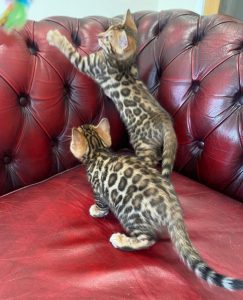
#2 The Asian leopard cat connection
Their wild appearance comes from ancestry with the Asian leopard cat.
The Asian leopard cat (ALC) is a small wild cat native to Asia. It has a naturally spotted coat, a sleek body, and strong hunting instincts—features that closely resemble big cats like leopards, just on a smaller scale. In the 1960s–1970s, breeders intentionally crossed Asian leopard cats with domestic cats. The goal was to create a cat that looked wild and exotic but behaved like a loving house pet. This is how the Bengal breed began.
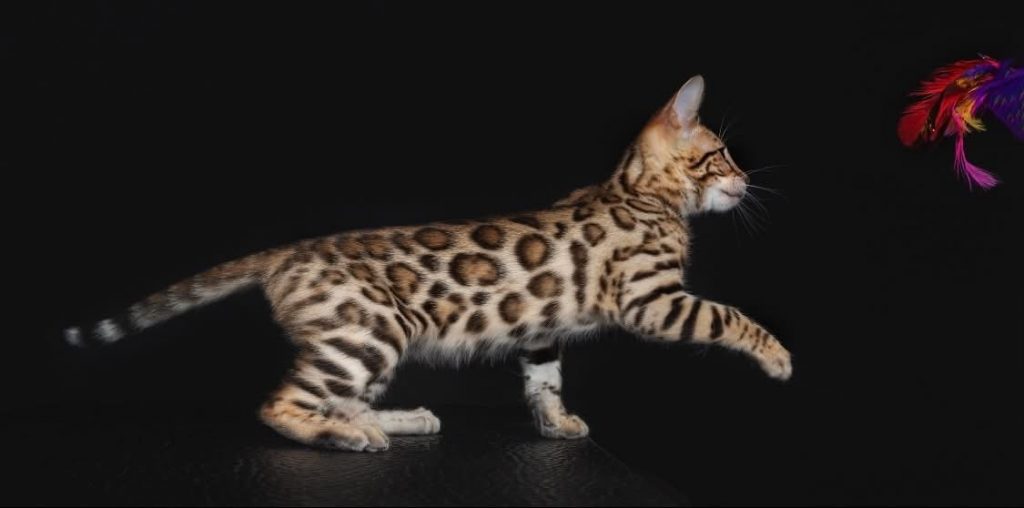
#3 Bengals & their sparkly coats, called “glitter.”
“Glitter” isn’t a colour or a pattern—it’s a unique hair structure found in many Bengal cats. Each individual hair shaft has translucent, hollow tips that refract and reflect light. When light hits the coat, it creates a sparkling or shimmering effect, almost like the fur has been dusted with gold or frost. The glitter trait is believed to come from the Asian leopard cat ancestry, where wild cats evolved coats that reflect light in ways that enhance camouflage.
Not all Bengals carry the glitter gene, it is more common in well bred Bengals and is seen as a bonus trait, not a breed requirement. All Dreamstone babies carry the glitter gene & sparkle!
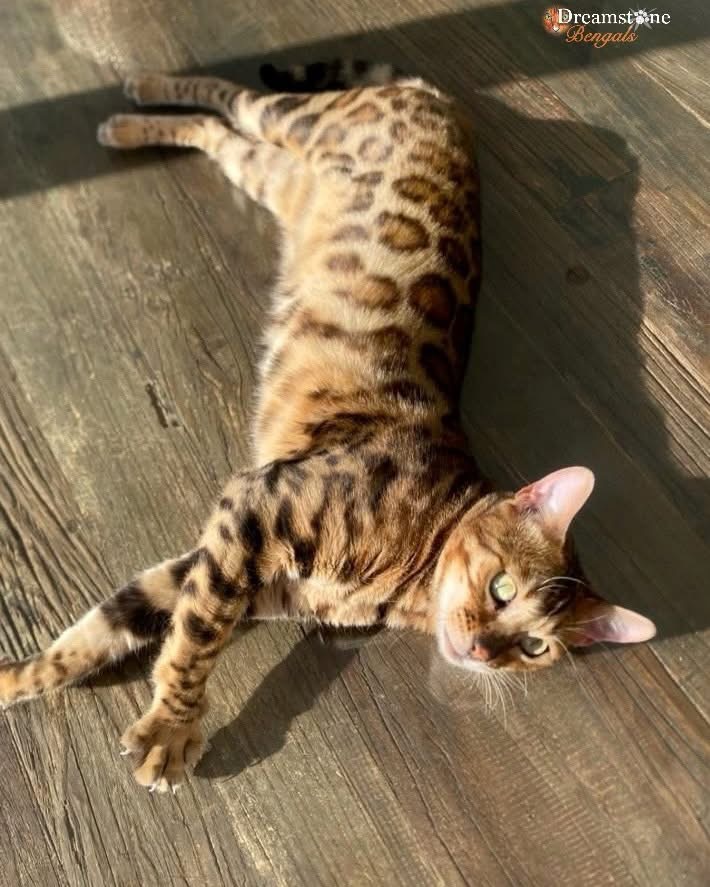
#4 No two Bengal coat patterns are exactly the same!
Their patterns are genetically complex. Bengal coat patterns aren’t controlled by a single gene. Instead, they’re shaped by multiple interacting genes that influence: Spot size, Spot shape (solid spots vs.rosettes), Spacing between markings, Contrast between markings and background colour, Direction and flow of the pattern. Because so many genes are involved, the number of possible combinations is enormous—far more than in breeds with simple tabby patterns.
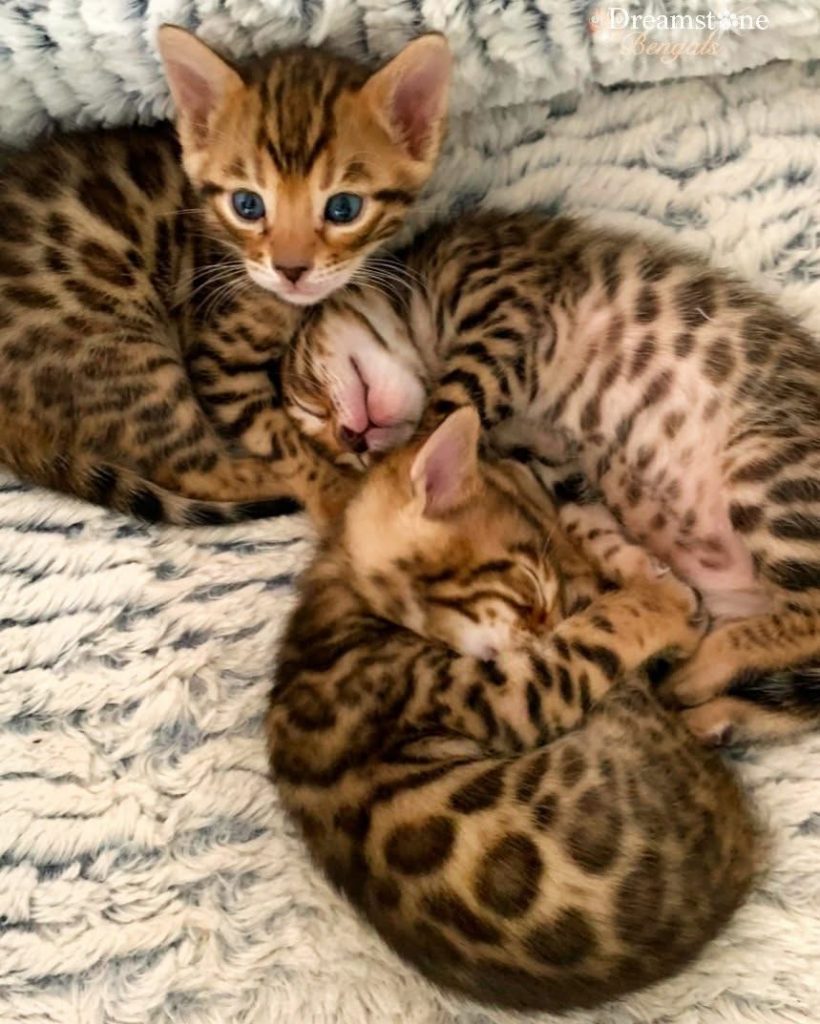
#5 Bengal cats are built like feline athletes!
They are extremely athletic & love to climb.
Bengal cats have a body structure that supports power and agility: Long, muscular bodies with very little bulk, Powerful hind legs designed for jumping and launching upward, Strong shoulders and core, giving them excellent balance, Slightly longer back legs than front legs, which boosts vertical leaps.
This build allows Bengals to jump higher and farther than most domestic cats.
#6 You can leash train a Bengal!
Many Bengals enjoy walking on a leash like a dog due to their specific breed traits, such as:
Their intelligence,
They crave exploration,
They are adaptable to new environments,
They have high energy levels.
Walking your Bengal on a leash encourages a strong bond between cat and human. For Bengals, leash walking becomes less like “taking the cat outside” and more like going on an adventure together.
#7 They’re famous for being very vocal and chatty with Strong communication instincts.
Bengals are highly social cats that actively communicate with their humans. Instead of quietly existing in the background, they:
Announce their presence,
Comment on what you’re doing,
Ask for attention, food, or play,
Respond when spoken to.
For Bengals, vocalizing is a tool, not just noise. Because Bengals are very intelligent, they notice routines, remember what usually happens, and get frustrated when expectations aren’t met. If dinner is late, playtime is skipped, or a door is closed, a Bengal is likely to voice their opinion—loudly and clearly.
#8 Bengals are often described as the “geniuses” of the cat world.
They are highly intelligent and can learn tricks easily. Bengals inherit problem-solving skills from their Asian leopard cat ancestry, where survival required:
Planning movements,
Learning quickly from experience,
Adapting to changing environments.
Those instincts translate into modern Bengals who think before they act.
Many Bengals can easily learn tricks to: Sit, High-five, Spin, Fetch, Jump through hoops, Walk on a leash, Ring a bell, Come when called. Bengals are also great candidates for clicker training.
#9 Some Bengals can figure out how to open doors and cabinets!
Bengals are highly intelligent and observe their humans behaviours carefully. They love to test actions to see what works. For example, if they see you twist a handle, pull a lever, or push a door, they may experiment until they figure out the same movement themselves.
#10 Bengals are famous for their unusual love of water, which sets them apart from most domestic cats
Bengals often enjoy water because they inherited curiosity and some wild-cat comfort from running water. Their intelligence makes water a playground of possibilities. Unlike most cats, a Bengal might join you at the sink, splash in the bathtub, or even “help” with dishes—all while having a blast.
#11 Bengals love interactive toys and puzzle feeders!
Bengals love interactive toys and puzzle feeders because- They’re smart and curious, They need mental and physical stimulation, They enjoy hunting-like challenges, These activities strengthen their bond with humans.
A bored Bengal is a mischievous Bengal—interactive toys turn that energy into fun, safe, and rewarding play.
#12 Bengals are well-known for forming strong, sometimes dog-like bonds with their humans.
Social and affectionate nature-Unlike some cats that are independent or aloof, Bengals are naturally social: They enjoy interacting with family members, They seek attention and companionship, They are playful, communicative, and interactive. This social tendency encourages strong connections with the people around them.
#13 A bored Bengal can become a mischievous Bengal!
A bored Bengal becomes mischievous because they are- Highly intelligent → need mental challenges, Energetic → need physical outlet, Curious → explore everything, Social → seek human interaction.
Think of a bored Bengal as a “tiny furry genius with energy to spare”—without stimulation, their creativity goes toward household chaos rather than fun games.
How to prevent mischief-Providing outlets for a Bengal’s energy keeps them happy: Interactive toys and puzzle feeders, Cat trees and climbing shelves, Regular play sessions, Training and tricks, Leash walks or supervised outdoor exploration. A well-stimulated Bengal is playful and curious—but rarely destructive.
#14 Bengals are famous not just for their wild-looking coats but also for their striking, expressive eyes. Bengals usually have striking green, gold, or blue eyes.
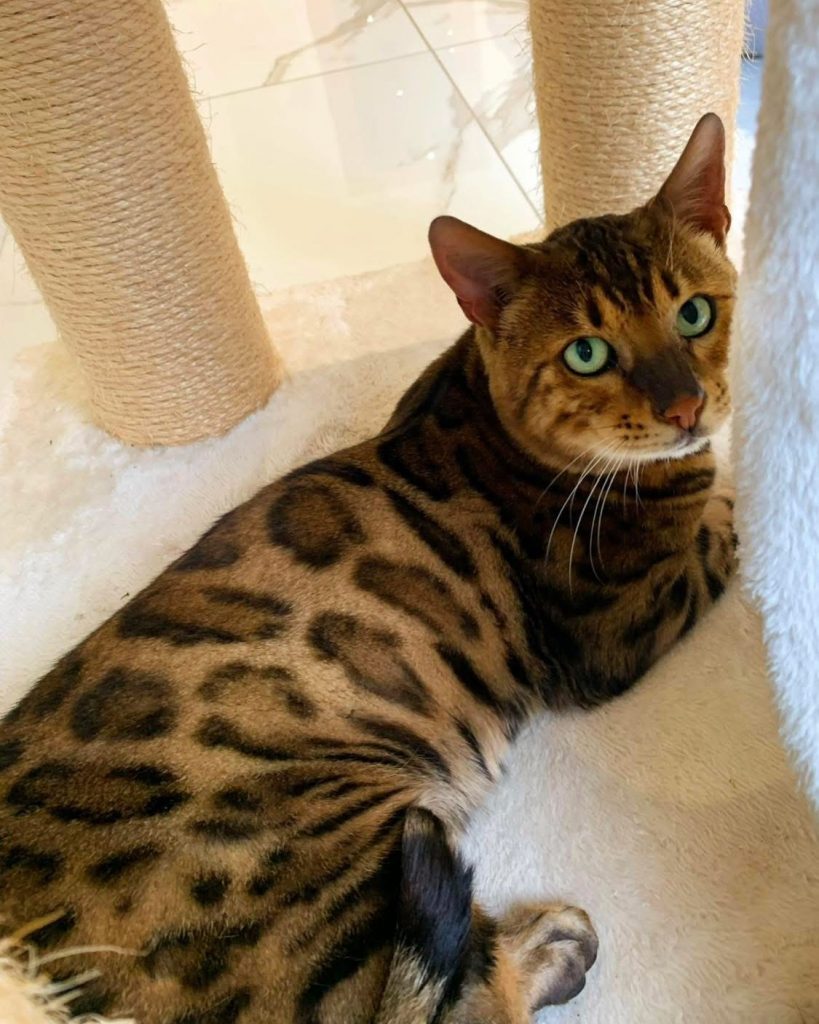
#15 One of the hallmarks of a Bengal cat is its luxurious, soft coat.
Their coat is short, dense, and incredibly soft to the touch. Their short pelt enhances the “wild cat” appearance, as their fur doesn’t obscure their body lines and provides a satin texture which can shimmer with glitter.
#16 One of the perks of owning a Bengal is that they shed less than many other cat breeds, making them easier to maintain.
Bengals shed less than many other cats because: Their short, dense fur holds hair in place, They have minimal undercoat, Their hair is strong and resilient, Occasional brushing keeps shedding very manageable making Bengals ideal for people who prefer low-maintenance cats.
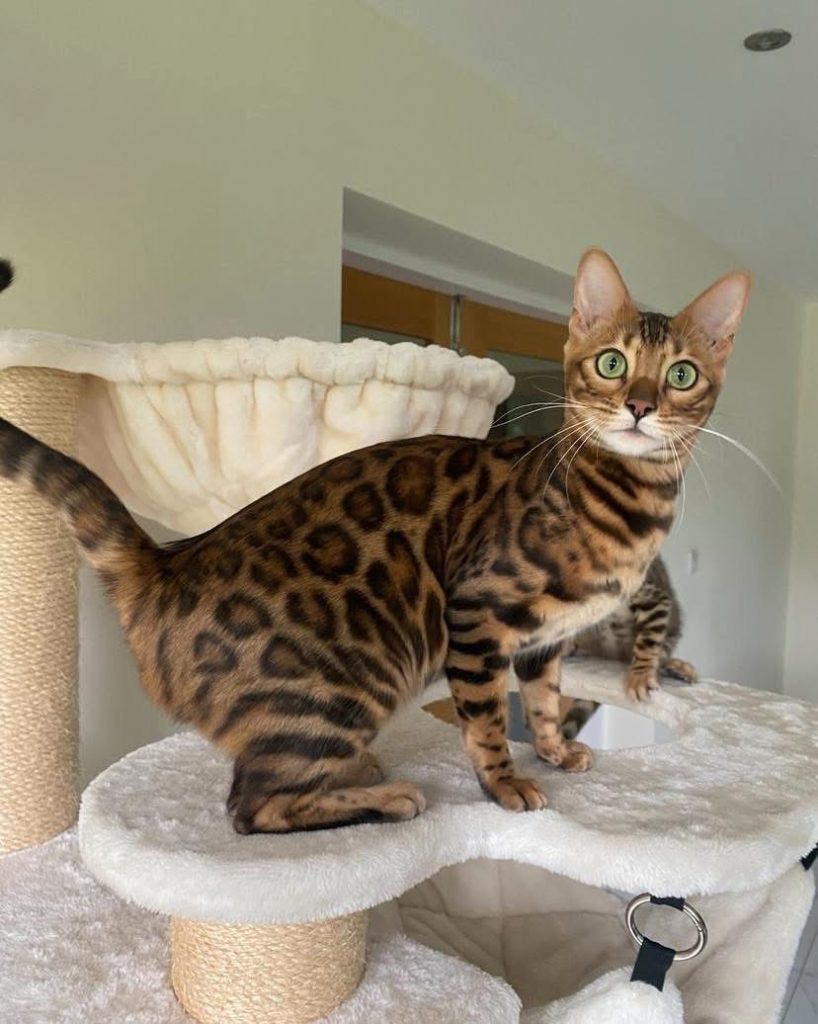
#17 They have powerful hind legs and can jump impressively high.
Bengals have long, muscular hind legs relative to their front legs: Provides extra leverage for launching vertically and horizontally, Gives them explosive power for short, high jumps, Supports agility for climbing and leaping onto high surfaces, This strong rear-end muscle structure is similar to wild cats, which rely on jumping for hunting and escaping predators. Their wild ancestry gave them natural jumping instincts, they combine strength, coordination, and confidence for vertical and horizontal leaps. Essentially, living with a Bengal is like living with a tiny feline athlete who can reach almost anywhere in your home.
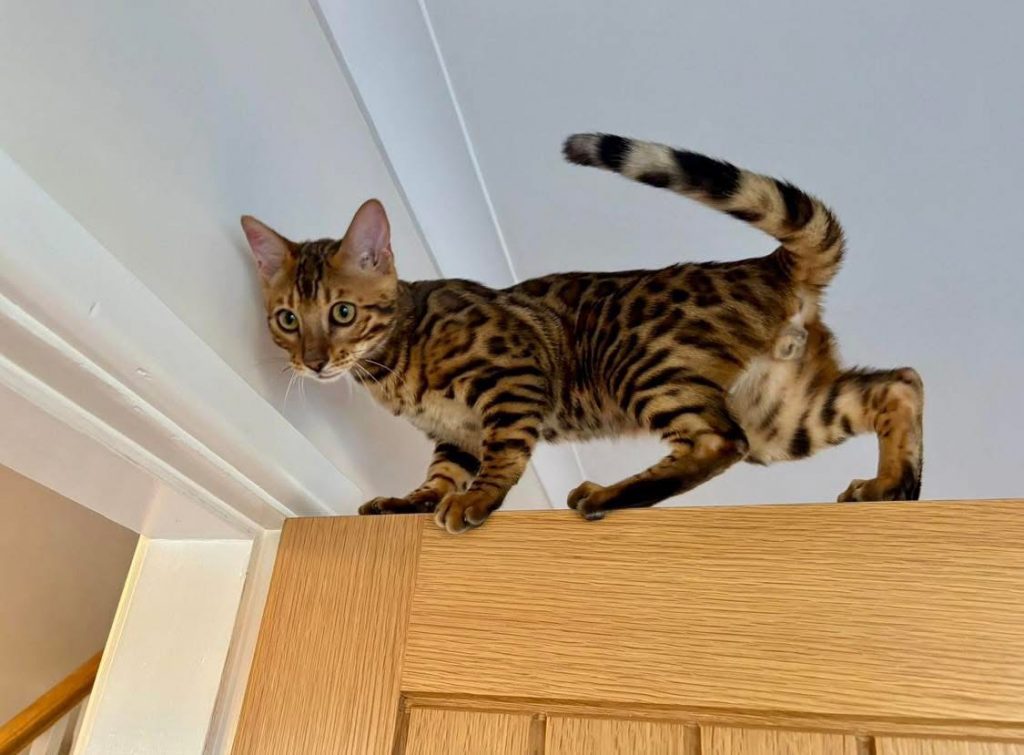
#18 Bengals are especially known for loving high places!
As we know, Bengals were originally bred from Asian leopard cats, which are natural climbers. In the wild, higher ground offers: A safe vantage point to observe prey and threats, Protection from danger, A place to rest while staying alert. Even though your Bengal is a house cat, those instincts are still very strong.
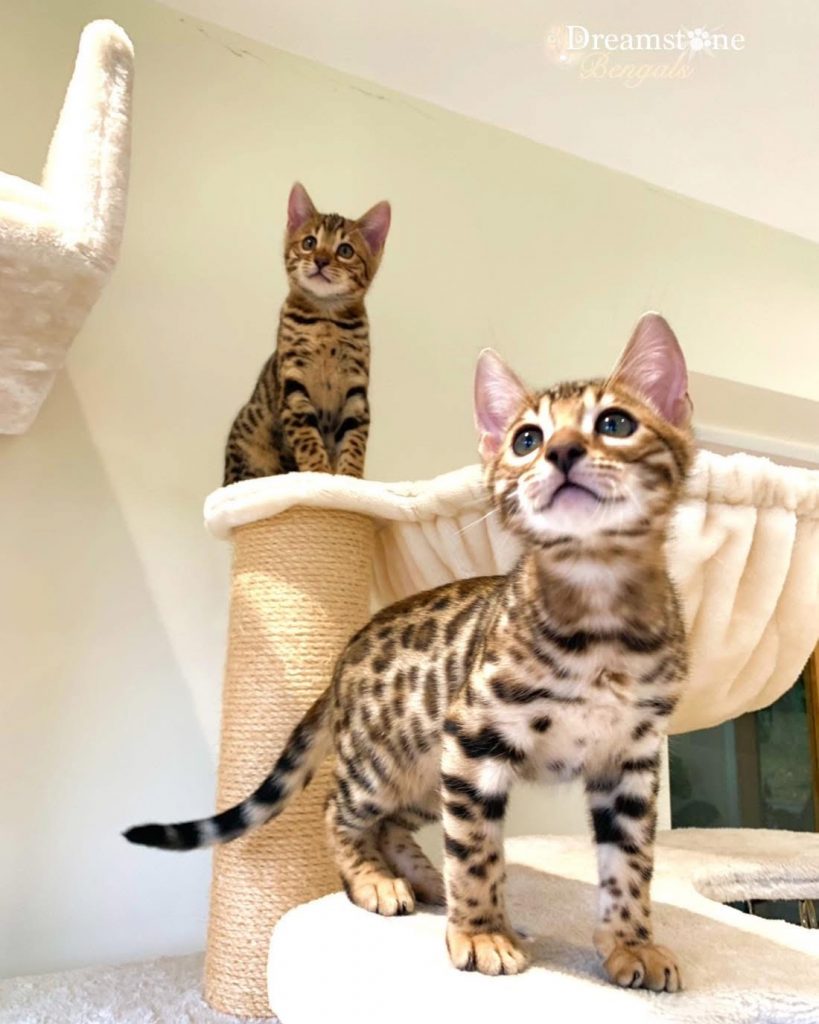
#19 Bengals are famously more energetic than the average house cat, and that energy comes from a mix of genetics, brainpower, and physical design.
Hybrid ancestry = high drive. Bengals descend from the Asian leopard cat, a small wild cat that survives by: Actively hunting, traveling long distances, constantly scanning its environment. That translates into a higher baseline activity level than most domestic breeds. Even many generations later, Bengals retain that “always on” engine. Bengals were intentionally bred to be: Muscular, Fast, Agile.
#20 Bengal cats typically have a lifespan of 12 to 15 years but some Bengal’s have been known to reach 21!
They are generally healthy, but like all breeds, they can be prone to certain genetic conditions. Its very important you find a reputable breeder that screens for common genetical diseases in the Bengal breed.
Bengal kittens are such a beloved breed among cat enthusiasts. Their unique blend of wild ancestry, playful personality, and striking appearance make them a wonderful addition to any home.